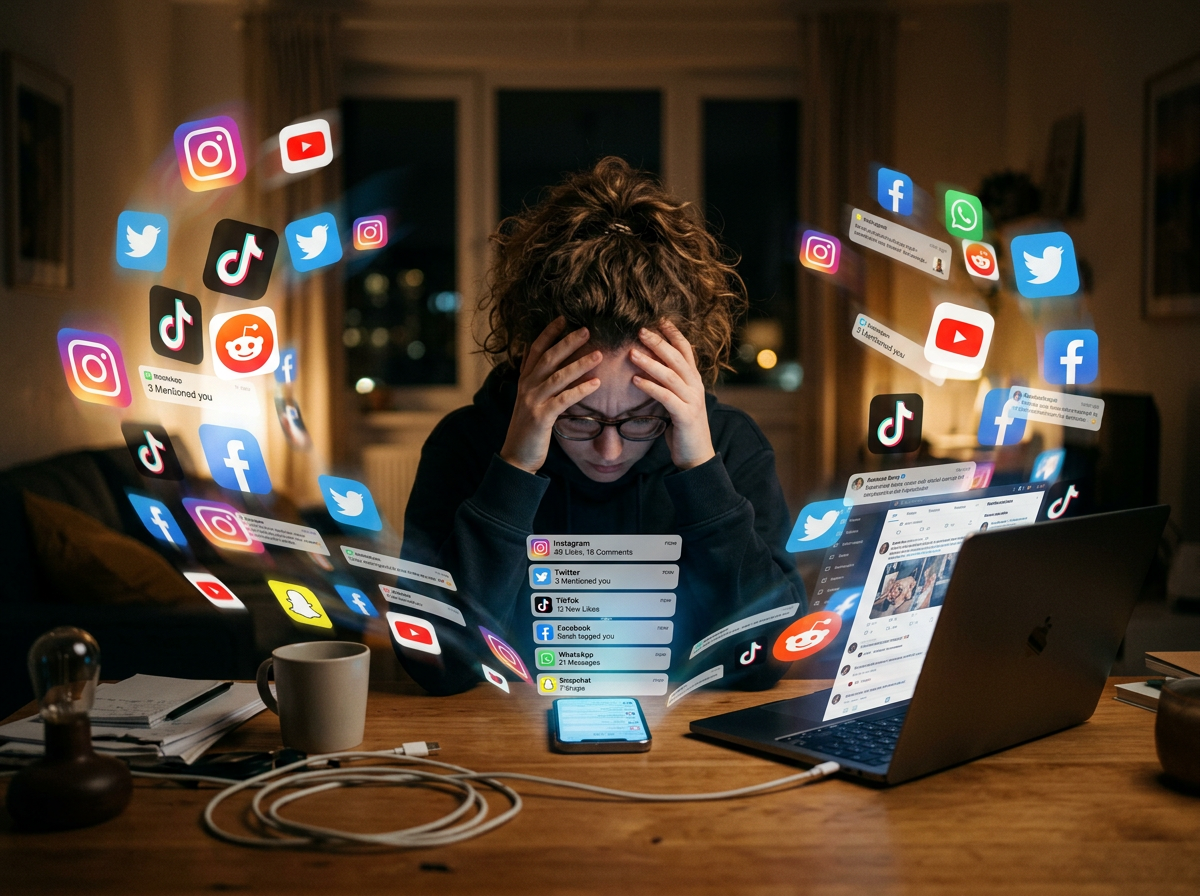
Living in the social media era
Before social media turned everyone into a broadcaster, influence had to be earned. Today, every loud opinion, manufactured controversy, and attention-seeking personality can reach millions in seconds. We’ve confused visibility with credibility, and in the process, given far too much influence to people who have done little more than master the art of getting attention.

We are better than the bullies
The Boy Who Got Bullied: And the Bully Lost is an inspiring children’s book about bullying, courage, friendship, and standing up for others. When a young boy faces bullying at school, unexpected support teaches him that he doesn’t have to face his struggles alone. A heartfelt anti-bullying story for kids and middle school readers that encourages kindness, confidence, empathy, and teamwork.
YouTube, Facebook, TikTok, and X hand a megaphone to anyone with an opinion — and just as easily, they hand out targets. Disagreement curdles into pile-ons; a stranger’s misstep becomes a mob’s entertainment. Platforms that promised community have instead given bullying a bigger stage and an audience that cheers it on.
They thrive on our hunger for attention, and cruelty is the cheapest way to feed it. Outrage and public takedowns out-earn kindness, which is why fame so often gets built on conflict and humiliation packaged as content. The lesson viewers absorb — especially young ones — is that cruelty is a path to relevance. Genuine role models are being replaced by influencers who model dogpiling as a lifestyle, while mainstream media amplifies the spectacle instead of questioning it.
paid advertisement

Distraction or influential?
YouTube, Facebook, TikTok, and X hand a megaphone to anyone with an opinion — and just as easily, they hand out targets. Disagreement curdles into pile-ons; a stranger’s misstep becomes a mob’s entertainment. Platforms that promised community have instead given bullying a bigger stage and an audience that cheers it on.
They thrive on our hunger for attention, and cruelty is the cheapest way to feed it. Outrage and public takedowns out-earn kindness, which is why fame so often gets built on conflict and humiliation packaged as content. The lesson viewers absorb — especially young ones — is that cruelty is a path to relevance. Genuine role models are being replaced by influencers who model dogpiling as a lifestyle, while mainstream media amplifies the spectacle instead of questioning it.
A great motivational speaker and author once said that if we look for things to be offended by, we will surely find them. But what if we stopped seeking out distractions that could offend us for no real reason? Can you imagine how freeing that would feel? What if we simply read posts, and if we disagreed, we just moved on?
Influencer:
In a world obsessed with followers, likes, and viral success, blindly trusting an influencer can be one of the most expensive mistakes you make. The polished lifestyle they sell may be more marketing than reality, carefully curated to attract attention and drive sales. Behind every glowing recommendation could be a sponsorship, an undisclosed agenda, or a carefully crafted image designed to persuade rather than inform. Too many people hand over their trust simply because someone has a large audience, forgetting that popularity is not the same as credibility. Before you buy the product, adopt the mindset, or follow the advice, ask yourself a simple question: are you following genuine expertise, or are you being influenced by someone who profits from your attention? The great Jim Rohn said, ” be a student not a follower”.
Let’s stop pretending that every influencer is a force for good. Not everyone with a ring light, a perfectly filtered selfie, and a massive following is trying to help people, spread wisdom, or change the world. Many are simply chasing attention, validation, sponsorship deals, and the next viral moment. Yet somehow we’ve reached a point where a person can become a life coach, financial guru, relationship expert, or health authority simply by attracting enough clicks.
Here’s the uncomfortable truth: popularity is not a qualification. A million followers do not equal a million reasons to trust someone. The loudest voice in the room is rarely the wisest, and the most polished image often hides the least authentic reality. Social media has made it easier than ever for confidence to masquerade as competence and for influence to be mistaken for expertise.
Before you buy the product, adopt the lifestyle, or take life advice from the latest online celebrity, ask yourself one simple question: if this person had no followers, no filters, and no carefully crafted personal brand, would their opinion still matter? If the answer is no, you may be following an influencer when you should be following your own judgment.
We are living in an era where anyone can have a platform, and too often ignorance mixed with confidence is packaged as influence. Podcasters, sportscasters, TikTokers, and every other kind of “er” flood our screens with opinions, and we eagerly consume them as truth. Somewhere along the way, popularity became a substitute for credibility and followers became a measure of wisdom.
Calling it cultish may sound harsh, but consider how fiercely people defend influencers they’ve never met, adopting their views, habits, and even identities. When influence matters more than expertise and attention is valued more than insight, we should all be a little more careful about who we choose to follow.
Discussion not argument
Before criticizing or bullying someone online, take a moment to remember there’s a real person behind the screen. Not every disagreement needs to become an attack. Not every opinion needs a response. Sometimes the strongest choice is simply to scroll on. Social media can connect, educate, and inspire—but only if we choose respect over hostility. Hate takes energy. Kindness takes intention.
We can’t control what others post, but we can control how we react—or whether we react at all.
Pause. Think. Choose kindness. Make social media better.
#StopBullying #SocialBullying #Cyberbullying #OnlineBullying #AntiBullying #ChooseKindness #ThinkBeforeYouPost #DigitalKindness #SocialMediaAwareness #BeKindOnline
Tailor social media to your needs
Social media platforms rely on users for their existence and profit from our addiction to instant gratification. If we reclaim control by reducing our engagement, particularly by avoiding social media for the first few hours of the day, we can mitigate the negative impact of these platforms and their incentive to spread harmful narratives. We have the power to boycott social media. We have the power to spread more positive or at the very least, not react to everything we disagree with. You don’t bark at every dog that barks at you.
Final thought
Social media is more than a source of instant connection—it shapes how we see the world and how we treat one another. Used thoughtfully, it can strengthen relationships, expand empathy, and help us better understand experiences beyond our own. The choice is ours. Kindness is noticed. Compassion is contagious. Even one thoughtful comment can create a ripple that reaches further than we realize.
Disagreement is natural, but challenging an idea is not the same as attacking a person. We can express our views without dismissing someone else’s humanity. The world needs more than outrage. Social media can become a space for meaningful dialogue, healing, learning, and growth—but only when we choose respect over hostility.
Every positive interaction helps shape the culture around us. When people feel heard, valued, and respected, online communities become places where we can rise together.
Pause before posting. Disagree with dignity. Choose kindness.
The platform is ours. Let’s use it wisely.